Bulk SMS Messaging Services Compared on Opt-Outs and Delivery
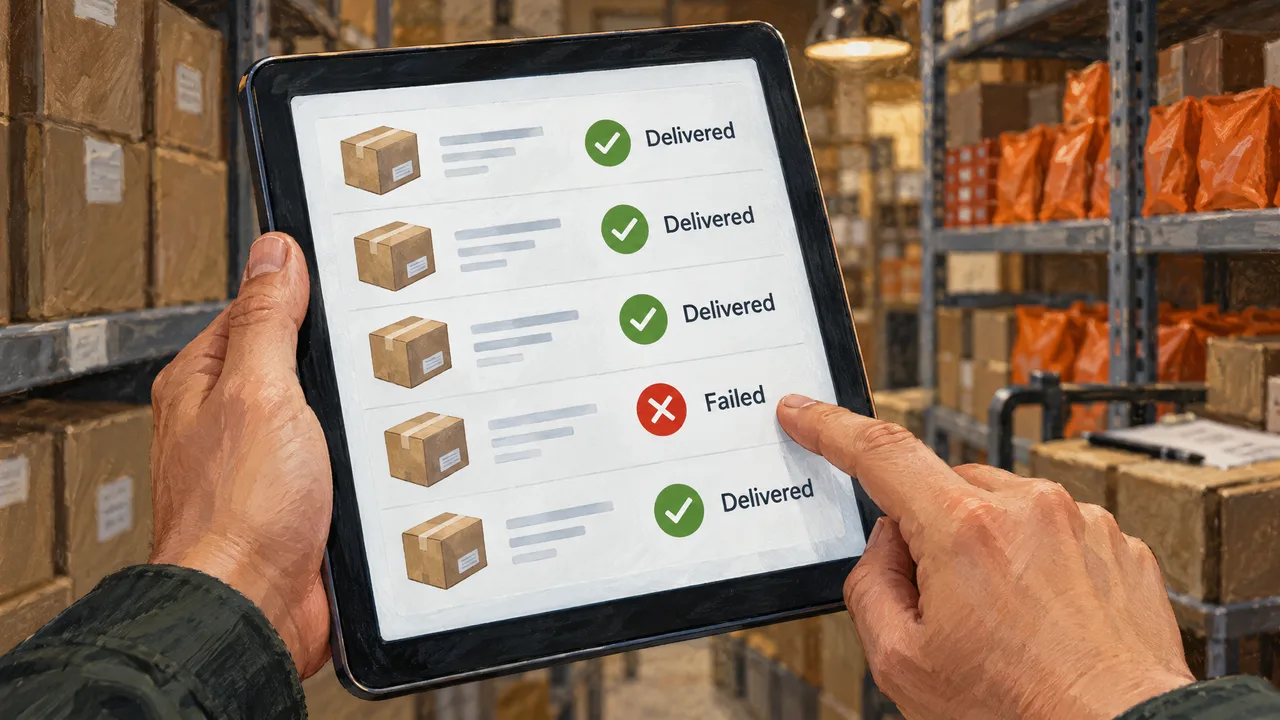
What decides whether the campaign works is what happens to the inbound replies and the opt-outs, and whether your provider’s sending setup survives carrier filtering.
That position is not contrarian for its own sake. Carriers police messaging traffic, and the rules they follow come from the Federal Communications Commission’s implementation of the TCPA: “The Commission relies on the TCPA to adopt rules applicable to mobile wireless text messaging providers, including the text blocking requirement” (Federal Register). You are buying access to a filtered channel. The provider that manages that filter well, and catches the answer, is worth more than a cheaper one that does not.
Table of Contents
- The Plain Meaning, Minus the Sales Language
- From Handset to Carrier Filter: How a Send Really Travels
- Running a Campaign That Survives Its Own Replies
- Old Habits That Now Cost You Deliverability
- Choosing a Platform for Your Situation
- Where Sociocs Sits in This
The Plain Meaning, Minus the Sales Language
A bulk SMS service is software that pushes one message to a list of phone numbers in a single job and keeps the thread open when people answer. It serves anyone with a list and a reason to reach it: appointment reminders, delivery notices, promotions, collections, staff alerts. What separates one from a mass email tool is the channel’s intimacy and its rules. Every SMS arrives in the same inbox as a message from a friend, and the law treats it that way.
Adjacent terms get mixed in. “SMS bulk messaging software” usually means the same tool with an API attached. “SMS text messaging services” sometimes describes a carrier gateway resold under a brand name. Those are delivery layers, and this site has written about where bulk text marketing sits in a broader customer conversation stack. The useful distinction is narrower: a sender moves messages out, a platform also holds the answer.
From Handset to Carrier Filter: How a Send Really Travels
The journey starts with your message and your list, then moves to a gateway, then to the recipient’s carrier, then to a handset. Every hop after the first is outside your control. That is why the setup you choose at the front matters so much.
Most serious tools do not run their own network path. They connect to an aggregator or carrier-grade provider. In Sociocs, business text messaging runs through your Twilio or Telnyx account with MMS support, so the delivery infrastructure is a vendor built for it, not a homegrown sender. You register the numbers you send from, and the carrier decides, per message, whether the traffic looks wanted.
Two things happen on the return path, and both are where cheap tools fall short. Replies land somewhere, and opt-outs arrive with them. If a “STOP” sits in a spreadsheet or an email inbox while the next campaign is queued, you have built a machine for collecting complaints. When people write back in a language other than yours, bulk text translation keeps the thread readable instead of leaving an agent to guess.
The older assumption that any list is worth texting still holds a grain of truth on the reach side. “With 97% of all mobile marketing text messages being opened by their intended recipients, mobile text message marketing is both effective and lucrative” (UW Law Digital Commons). High open rates are exactly why the channel is policed. Every unwanted message gets seen.
Running a Campaign That Survives Its Own Replies
The sequence below is how teams send without generating complaints or silent blocks. Each step feeds the next, so skipping one changes what the following step can do.
- Write the message first and count the segments. A long message splits into parts, and each part bills and sends separately. Trim before you build, not after.
- Build the audience from a consent record, not a pasted CSV. Store where and when each number agreed.
- Register the sending number and complete any carrier vetting the provider asks for. Unregistered traffic is the first thing filtering catches.
- Send a small test batch to your own team, including a reply and a STOP, and confirm both come back to the right place.
- Schedule the real send, then watch delivery reports for the first hour rather than the first day.
- Triage replies inside the shared inbox, honor opt-outs automatically, and hand real questions to a person.
- Review what bounced, blocked, or opted out, and fix the list before the next job.
The consent step is not paperwork for its own sake. “The FCC also confirms that, even when a party uses an autodialer to send a message, it may still avoid TCPA liability by obtaining the recipient’s prior express consent” (FDIC). A clean consent record is your defense and your delivery signal at once.
Old Habits That Now Cost You Deliverability
Blasting from a personal phone is an old pattern, and it still shows up in small businesses. It works for a day and then stops, because carriers treat abrupt volume from an unregistered handset as junk. Move to a registered number on a provider before the list grows past a handful.
Shared short codes used to be the cheap route for high volume. They carry their own registration burden and dilute your identity, while a dedicated number keeps replies addressed to you. Register properly rather than borrowing someone else’s throughput.
The most expensive habit is a send-only mindset: a tool that pushes messages out and forgets them. This is the failure mode behind slow-moving mass text sending without a conversation layer, where nobody owns the reply. Bulk is not one-way for long.
Choosing a Platform for Your Situation
Choose on rate and check the opt-out handling before you commit.
Once replies, opt-outs, and a second channel come into play, the math changes. You need the inbound queue and the send in the same place, because a reply that lands in one tool and a consent record in another is a compliance gap waiting to be audited.
Ask each vendor how opt-outs are processed, whether delivery reports show per-recipient status, and which channels besides SMS land in the same inbox: WhatsApp, Messenger, Instagram, Google Reviews. If the only answer is a CSV export, keep looking. The mass text approach a team should want respects the reply as much as the send.
| Option | Best for | Trade-off |
|---|---|---|
| Inbox-first platform | Teams handling replies and opt-outs across channels | More setup than a pure sender |
| SMS-only sender | High-volume single-channel blasts | Replies and other channels live apart |
| Automation-led toolbox | Local service businesses automating scheduling and follow-ups | Breadth may outrun depth on conversation history |
That third row describes tools in the automation category. It is a real fit for a salon that wants reminder texts. It fits less well for a business whose customer emails yesterday and texts today.
Where Sociocs Sits in This
Sociocs is built for the second situation. Business text messaging runs through Twilio and Telnyx with MMS support, and it sits next to WhatsApp Business messaging with click-to-chat, Facebook Messenger, Instagram DMs, Telegram Business Bot messaging, Google Reviews and Google Q&A management, and an online form builder with spam blocking, in one shared inbox. The point is that a bulk send and the conversation it starts live in the same team view.
We are not the cheapest per-message route, and we do not pretend to be. Sociocs connects to a Twilio or Telnyx account you already control, so the carrier rate is the carrier’s and not a marked-up credit. You get the platform around it.
Step up to Standard or Premium when the team and volume grow, or talk to us about Custom. See the pricing page for the tiers and the contact page when you want a second opinion on your setup.
Frequently Asked Questions
What is the best bulk text messaging service?
There is no universal winner, because the right pick depends on where replies land. The best option for you keeps sends, opt-outs, and inbound messages in one place your team actually opens, and connects to a carrier route you control. Judge candidates on how they handle a STOP, how fast delivery reports update, and whether the other channels your customers use share the same inbox. A low rate means little if the answer to a text disappears into a separate tool.
What is the best service for sending bulk SMS messages?
For straight high-volume sending, a sender that lets you bring your own Twilio or Telnyx account tends to be the most efficient, because the per-message cost stays with the carrier. What separates a good service from a cheap one is the paperwork and the controls around it: number registration, a consent record, a template that trims to one segment, and a delivery report you can act on. Pick the vendor whose controls match your team’s ability to run them.
Is bulk SMS legit?
Yes, when it is sent with consent. A bulk SMS service is a legitimate tool used by banks, clinics, and retailers for reminders and updates. What makes a send legal is the recipient’s agreement to receive it and a clear opt-out that works. Bulk SMS is not the problem; unwanted bulk SMS is, and carriers filter for it.
Is there a free way to send bulk SMS messages?
Nearly every free “bulk sender” you find is either a trial with a hard message cap or a marketing front for a paid gateway. Free is a fair way to test the workflow. Take a real list and a real reply test with you.